Uncategorized - Page 2 of 7 - Devex Systems | Heating Excellence
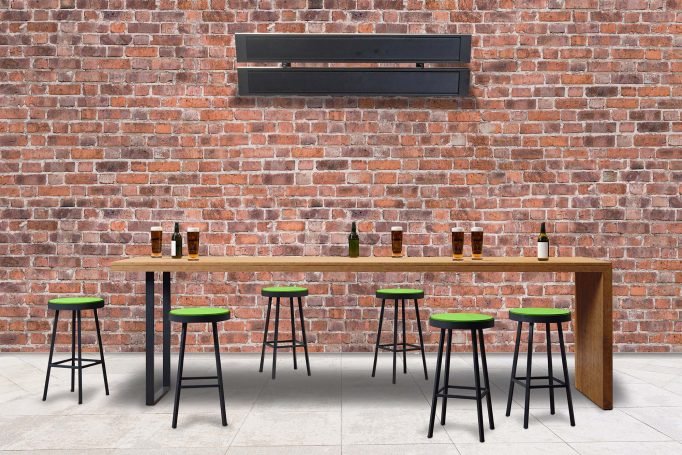
Comfortline infrared heater mounted above a pub bar area with exposed brick wall and green stools

Why Electric Outdoor Heating Panels? They are Smart Solutions for Hard-to-Heat Areas

After four decades, Devex Systems remains a market leader in the design and installation of innovative heating solutions for indoor and outdoor commercial and residential uses.  From outdoor electric overhead heating panels and gas radiant tube heaters, to hydronic and electric underfloor heating, Devex Systems has gained the trust and confidence of homeowners and major industry specifiers across the country.  In addition to their comprehensive range of sustainable and high-quality products, their reliable technical support and after-sales care remain second to none.

With the latest industry trend leaning towards sustainability with eco-friendly materials and resources, radiant heating delivers a smart solution for hard to reach areas, including offices, manufacturing factories, warehouses, workshops, garages, schools, churches, alfresco dining areas, outdoor entertainments areas, nursing homes and more. As opposed to forced air heat, electric overhead radiant heating systems offers a more balanced heat distribution whilst minimising the movement of dust particles, a benefit for allergy sufferers.

Devex Systems is proud to offer one of the top European manufactured product for electric overhead radiant heating systems, Comfortline™.

Why Choose Devex Systems’ Comfortline™ Electric Outdoor Heating Panels?

  • Odourless and non-polluting
  • Seamless design ideal for surface and recessed ceiling installation
  • Noiseless operation
  • No maintenance required
  • No air drafts

The Comfortline™ electric outdoor heating panels deliver a modern form of flexible heating similar to the heat of the sun on a cold winter day. The electric overhead radiant heating systems are made of a series of new anti-corrosive and improved panels that radiate a cost-efficient, gentle and long-lasting heat that enables the user to save up to 10% usable energy.

The upgraded modern design of electric outdoor heating panels features slanted edges and roughened surfaces, which increases the surface area and maximises its capacity to radiate heat. The radiant surface is antic-corrosive, made from alu-zinc metal for durability.

Comfortline™ Terrace Heaters

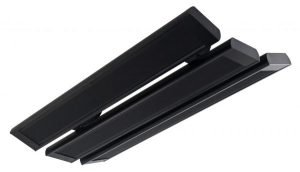
One of the products available, the Comfortline™ Terrace Heaters features a sleek black surface and designed for the zonal heating of winter gardens or roofed balconies and terraces. Each heater is equipped with mounting brackets than can be tilted for wall mounting. Devex Systems offer the Comfortline™ Terrace Heaters with a 5-year warranty.

For more information on the Comfortline™ Terrace Heater and the other options such as the Comfortline™ Excel and Comfortline™ Slimline or contact us on 1800 636 091.

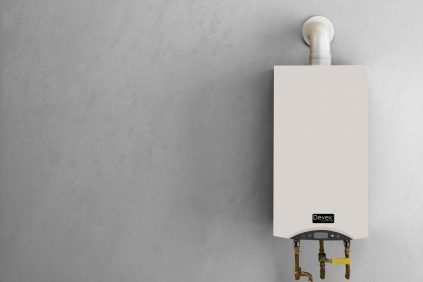
devex boiler

The X Boiler – Discrete, Powerful with a Low Environmental Impact

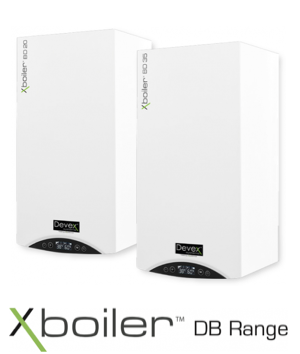
From its compact design and impressive heat output, to its low-level emissions, Devex Systems’ new range of X Boilers offers a range of homeowner benefits. The advanced design and compact size (740 x 400 x 340 mm) make these condensing boilers suitable for different locations throughout the home.

Thanks to the wide modulation range, short-cycling is minimised during the operation of the X Boiler, which increases its lifespan. Additionally, our boilers are easily connected to domestic hot water tanks with an integrated 3-way valve. The X Boiler is available in two versions – the BD 23 with a modulated output from 3.1kW up to 23.0kW or the BD 38, from 4.5kW up to 38.0kW.

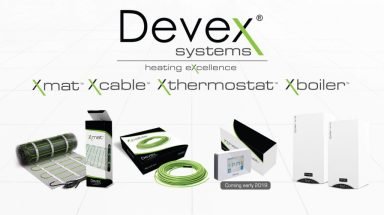
The X Boiler is a recent addition to our growing line of products known as the X-Brand. Since October 2018, we have been producing our own line of high-quality cables, mats and gas boilers in addition to thermostats. All of our products feature innovative heating technologies that are energy efficient and cater to the specific needs of Australians.

Call us on 1800 636 091 or email on info@devexsystems.com.au

Thank you!

new ts 500

The new TS 500

The new TS 500 – Design Excellence without Compromise

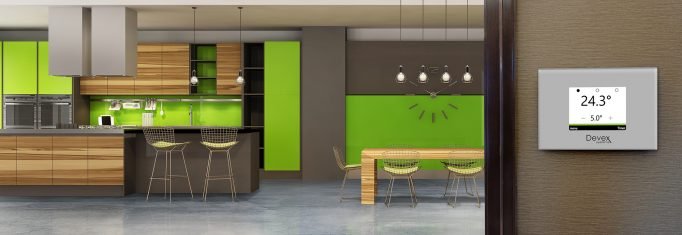
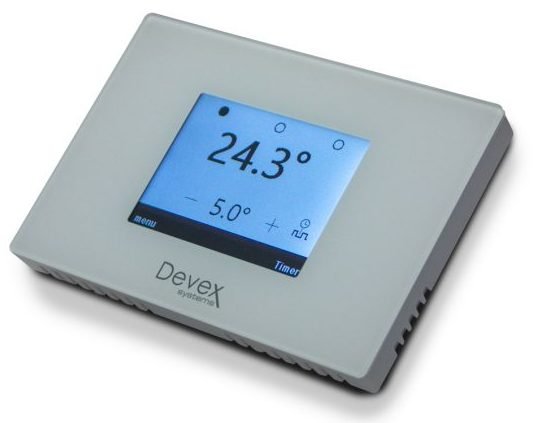
Devex Systems is thrilled to announce the launch of its newest product, the TS 500. This intelligent thermostat can control all household or commercial heating needs including electric and hydronic floor heating, as well as overhead heating and radiator panels. With a sleek and discreet design, the TS 500 is simple to use with coloured touch screen features and a built-in wizard assistant that clearly walks the user through the thermostat setup.

Specifically designed for Australian households and commercial environments, the TS 500 is the result of extensive research and development into the growing demand for heating solutions using smart technologies. The energy saving feature integrated to the thermostat tracks the daily, monthly and yearly electricity consumption contributing to considerable savings. To these tangible benefits, a 5-year warranty ensures peace of mind.

devex-products

Devex Systems – New Range of Electric Floor Heating Products and Gas Boilers

Our Valued Customers,

Devex Systems is proud to announce the launch of its own brand of “Devex Systems” high quality cables, mats, thermostats and gas boiler! As an Australian company with 40 years’ experience, we are thrilled to take this step to continue to meet your needs in an increasingly effective and efficient manner.

Through our own branded products, we are able to better control our product lines for you. In addition, we now have access to various European suppliers that will enable us to deliver innovative new technologies that are appropriate for our Australian market.

Devex Systems cables and mats have hand-made terminations ensuring higher quality and less susceptibility to termination faults. Having our own brand of cables and mats with local finishing also means that we will not have out-of-stock delivery issues and we can deliver large project orders on very short notice. The thermostats are user-friendly and specifically designed for Australian households and commercial buildings. And, our condensing boilers have top of the range efficiencies with low NOx emissions making them remarkably environmentally friendly and perfect for integration with hydronic systems.

In terms of quality, these products are better than or equivalent to the ones we are currently providing, thereby maintaining our commitment to offer high quality products. We have sourced the best available European made cables, to ensure that we can locally manufacture the quality you have come to expect from us. The in house fabrication of cables and mats enhances our ability to pursue our mission of customer service excellence.

Please feel free to contact us as we would be more than pleased to share with you any information regarding these new product lines that we will be proudly distributing.

For an overview of the products we will be offering, please click here: https://devexsystems.web-winners.com/x-products/

Regards,

Managing Director

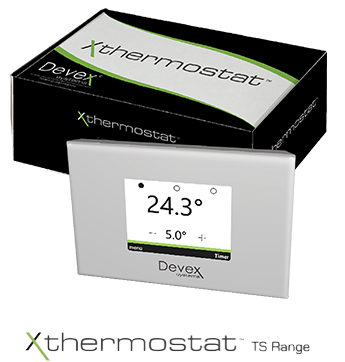
Devex Xthermostat TS Range touchscreen thermostat with product box, landscape view

Choosing Smart Programmable Thermostats for the Right Application

Choosing Smart Programmable Thermostats for the Right Application

An efficient floor heating system calls for the right thermostat. One that will provide users with control over the heating in specific rooms throughout the home to meet all of their expectations.

Devex Systems offer a comprehensive range of thermostats catering to all kinds of applications. All thermostats have the same aim of providing temperature control, but generally, there are two types: programmable and non-programmable.

Non-Programmable vs. Smart Programmable Thermostats

Non-programmable thermostats are basic in features and functionality. The benefit of a non-programmable thermostat is its high energy efficiency on account of thermal mass. The more thermal mass utilised, the slower the response time of the system, along with how far the heating pipes and cables are away from the surface. In addition, non-programmable thermostats are cheaper and consume less electricity, proving to be the economical choice. Advanced functionalities are not always needed, especially if heaters are sufficient to meet the heating demands of a household. Non-programmable thermostats are highly recommended for Home Automation Systems and central heating system installations, utilising hydronic floor heating.

As expected, programmable thermostats feature innovative and intelligent modern technology. These devices are very quick to respond, enabling users to program the heating setup as suited to their lifestyle. This means that the system can automatically switch the heat on and off as per the set program. Programmable thermostats are highly recommended for installation throughout all room in the home. A benefit of having a programmable thermostat in your bathroom is that it allows the floor to be warm before you use the space and turns itself off, thus reducing your electricity usage and you never need to worry about leaving it on.

The TS 500 Programmable Thermostat by Devex Systems

The TS 500 is our most popular and in-demand underfloor heating thermostat. With an easy to use set up wizard, occupants can have peace of mind with this ‘set and forget’ system. The TS 500 thermostat has a sleek and modern appearance with a user friendly coloured touch screen. It offers a number of built-in energy saving features and is designed to save the customer money by reducing their energy consumption.

The TS 600 Programmable Thermostat by Devex Systems

The 600 is an electronic programmable timer thermostat by Devex Systems, specially designed to control electrical floor heating elements. The thermostat is built exclusively for fixed installation, upon which it can provide comfort heating to the floor and direct heating to the entire room.

Some of the sought-after features of the TS 600 include a touchscreen display with light for easy operation, like the TS 500. The product development team at Devex Systems equipped the TS 600 with easy-to-follow menu-driven set up instructions. Through an app, users can walk through an installation wizard with room/floor type-specific setup.  The intuitive app control communicates via a secure cloud connection such as what is used by banking applications.

The TS 500 and TS 600 Thermostats

Whilst both of these thermostats are programmable and similar to each other, there are some differences. The TS 600 has the ability to be programmed, updated and operated via a smart phone or tablet from anywhere. This thermostat is best suited to those who wish to have the controls for everything in the palm of their hands. It is suited to all homes from those with high-end finishes to holidays homes. Having the TS 600 in a holiday home gives you the ability to turn the heating on prior to your arrival, providing the thermostat has power and Wi-Fi connectivity.

The TS 500 is programmed and operated from the room that is being heated. The TS 500 has an initial set up wizard much like the TS 600 so little to no interaction is needed once set up. A great feature for the TS 500 is the easy conversion from programmable to manual use. If you decided to turn it on outside of a heating period, you can do so without losing any of your programming times and then switch it back to resume normal heating times. Both of these thermostats are equipped with energy-saving programs, open window detectors and are backed up by our 5-year warranty.

For more details view our full range of thermostats.


devex boiler

Choosing the Optimum Domestic Hot Water Tank by Devex

Hydronic Underfloor Heating Systems

Devex Systems specialises in the design and installation of state-of-the-art Hydronic Underfloor Heating systems. Hydronic Underfloor Heating is a closed system made out of pipes usually embedded in the slab, in which hot water runs through to heat the floor. Because it is a complete, separate system on its own (with a heat source), we often get requests from customer on how to integrate this system with a DHW system. One of the best solution to achieve this is actually to use a single heat source for both systems as well as a single-coil DHW tank as a heat exchanger between the closed, hydronic floor heating system and the open, DHW system. Not only does it make your system more simple (avoiding having two heat sources to maintain), but it can also reduce upfront and running costs.

When it comes to choosing a domestic hot water tank, size matters. With the wide range of offers available on the market, it is prudent to choose a properly sized domestic hot water (DHW) tank that will provide the right amount of hot water to meet the particular consumption needs of your household.

Heat Source

The type of heat source is one of several significant parameters to observe in sizing a DHW tank. With that said, users should be informed that DHW tanks are more efficient for use with boilers than with heat pumps. The latter setup typically results in a maximum temperature of 60°C. On the other hand, a typical boiler delivers a maximum temperature of around 80°C. The boiler, therefore, allows users to store 200 litres of 80°C water — certainly more energy than the 200 litres of 60°C water with heat pumps.

Power of the Heat Source

Another selection criterion is the power of the heat source. There is not much promise in purchasing a big DHW tank if the heat source does not provide enough power to heat it up when needed. The user must properly quantify the power of the heat source to help define the maximum capacity of the tank. Generally, it takes 1 hour to heat up 25 litres of water with 1 kilowatt. Proportionally, it would take 10 hours to heat up 250 litres of water with the same amount of energy.

In addition, the demand of hot water will help determine the minimum capacity for a DWH tank. The tank must not be too small to the point of running short of hot water to address the daily consumption demand. A standard economical shower head uses 9 litres of 45°C water per minute, equating to 4 litres of 80°C water per minute or 6 litres of 60°C water per minute.

For more information about choosing the optimum domestic hot water tank to go with your hydronic floor heating system, please contact us on 1800 636 091 or email us on info@devexsystems.com.au.

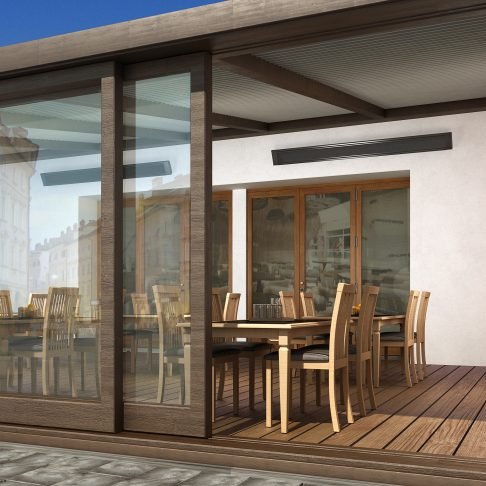
Comfortline infrared heater installed above an outdoor restaurant terrace dining area

Comfortline Terrace Heater

The electric Comfortline Terrace Heater is based on the concept of radiant heating.  Radiant heating delivers warmth directly to occupants and surfaces using radiation instead of air convection, which is just like the sun, yet these heaters do not waste energy by emitting unwanted visible light which helps ensure minimal running costs.  Since radiant heating is independent of airflow, it can be used effectively in outdoor locations, where heating the air is not practical and can be inefficient.

Devex Systems are the exclusive supplier of Comfortline Terrace Heaters in Australia, and we offer this product with a 5-year warranty.  It has an elegant design that allows it to blend into most environments.

Comfortline Terrace Heater: Product Features and Installation Info

The Comfortline Terrace Heaters are easy to install, being provided with adaptable mounting brackets and a 2m flexible lead that can be wired in or fitted with a three-pin plug.  The supplied brackets allow it to be angled to different orientations when mounted on either walls or ceilings, and if installed vertically or at an angle, then the lead wires are to be located at the lower end of the heater.  When installed on a wall, the Comfortline Terrace Heater requires a minimum clearance of 1.8 metres from the floor.

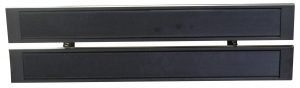
They are black on all surfaces, which makes them unobtrusive when blending into a dark background.  The product is available in 1000-watt and 1500-watt versions, and multiple units can be used for larger areas, allowing the product to meet a broad range of heating needs.  Up to three heaters can be installed together in a cluster for a maximum output of 4500 watts per cluster.  Clustering is achieved by fixing the heater to the optional two or three heater mounting brackets. The three heater bracket permits each individual heater to be angled separately.

The Comfortline Terrace Heater comes with an IP45 rating, which means it is well-suited for all types of installations provided it will not be exposed directly to rain, dusty or dirty environments. They are therefore ideal on terraces and balconies.

The Comfortline Terrace Heaters are constructed from Aluzinc coated steel with a quality powder coat finish which when combined together provides a high resistance against corrosion.  The heating elements are swaged into an extruded aluminium heating panel and have an internal reflector to maximise the radiant heat output.

Where Can the Comfortline Terrace Heater Be Used?

With its radiant heating technology and adjustable mounting brackets, the Terrace Heater can be used in many applications. The product offers excellent performance in outdoor areas such as terraces, balconies, patios, umbrellas, pergolas, marquees, garden tents and courtyards. Of course, it is also suitable for indoor applications such as hospitality, healthcare, churches, sports and education.

Feel free to contact our experts on 1800 636 091 or email at info@devexsystems.com.au for further information on our Terrace Heaters.


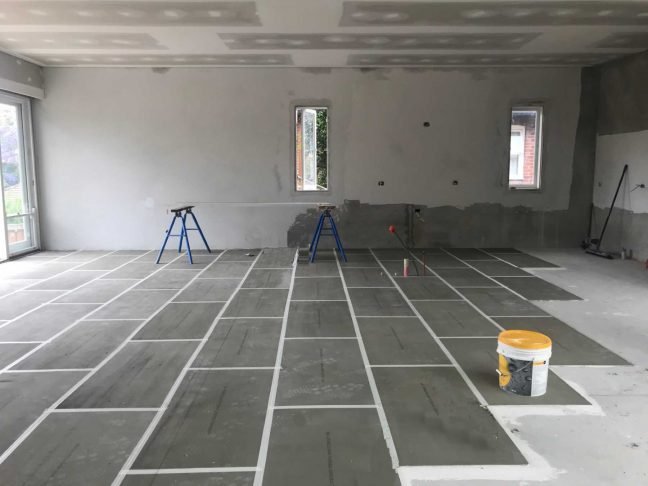
Underfloor heating installation in progress with heating cables laid in a grid pattern across a concrete subfloor

Thermal Insulation for Radiant Floor Heating Systems

Thermal Insulation for Radiant Floor Heating Systems

Ideally, a radiant floor heating system should direct its entire energy upwards, towards the indoor space being heated. However, the lack of appropriate thermal insulation can allow heat to travel downwards as well, which represents an energy loss.  Where a slab is on the ground then what is happening under the slab can absorb large amounts of heat, particularly during the winter.  This effect can also be significant for the suspended slab of a building where heat can be lost to the area below the slab.

The best way to control heat loss from radiant floor heating systems is to install thermal insulation below the electric heating cables or the hydronic heating pipes.  This way, most of the heat is then directed towards the room, greatly increasing energy efficiency.  Such a system can operate with a lower energy input than one without insulation, reducing its running costs.  In addition, insulation provides a faster warm-up time and allows improved control over the heating to enhance comfort.

This article will provide an overview of the thermal insulation products we recommend at Devex Systems, based on their field-proven performance.

F-Board

F-Board is a thermal insulation product made from rigid extruded polystyrene sheets with a coating on both sides.  This installation is particularly effective under X mat and tiled floors, which reduces downward heat loss and so provides a faster warm-up time.  F-Board also offers water resistance and compressive strength, while being lightweight and easy to install. Two products are available, each with a different thickness and insulation R-value:

  • F-Board  6-mm, R0.16
  • F-Board 10-mm, R0.29

Although F-Board can be installed under a screed, the reduced thickness of the product diminishes insulation performance.  Other thermal insulation options (such as XPS sheet) are usually better suited when a screed is used.  View the data sheet.

Extruded Polystyrene (XPS) Insulation Sheet

Extruded polystyrene rigid sheets are designed for a broad range of floor constructions and applications:

  • Insulation between an existing slab and a topping slab.
  • Under a screed on a structural slab, complemented with a light steel mesh.
  • Between battens under diffusion plates or timber floors.
  • Freezers, cold storage rooms or other similar applications

The FoamulaR brand of XPS insulation is designed to maintain 90% of its thermal performance after 20 years, and is unaffected by moisture, mould and bacteria.  It is available with various insulation thicknesses and R-values:

  • FoamulaR 25 mm, R0.89
  • FoamulaR 30 mm, R1.07
  • FoamulaR 50 mm, R1.78
  • FoamulaR 75 mm, R2.67
  • FoamulaR 100 mm, R3.57

For maximum thermal insulation performance, XPS insulation should be installed not only over flat areas, but also against slab edges and trenches before pouring concrete.  FoamulaR has compressive strengths that range from 150 kPa to 650 kPa (though FM300 at 300kPa and FM350 at 350kPa are the most common) so the product can adapt to a broad range of applications.

REHAU Tacker Board for Hydronic Installations

REHAU Tacker Board is a system designed exclusively for hydronic floor heating systems embedded in-slab, accomplishing three main functions with a single product:

  • Thermal insulation
  • Acoustic sound attenuation
  • Hydronic piping layout and support

Tacker Board uses expanded polystyrene (EPS) insulated board covered with a fabric reinforced water-resistant polyethylene foil plastic sheet, with a usual thickness of 25 mm.  The overlapping water resistant foil prevents moisture and water from the screed reaching the EPS floor insulation.

Tacker Board complies with the relevant industry standard and is CFC free.  It has a Standard Fire Class F (according to BS EN 131363).

The system ensures that piping is not displaced when concrete slab is poured, while providing a uniform distribution of heat.  REHAU Tacker Board is available in various product versions, where the two or three digits after EPS indicate compression strength in kPa at 10% deformation:

  • Tacker EPS70,   25mm: R0.66
  • Tacker EPS70,   50mm: R1.32
  • Tacker EPS100, 25mm: R0.69
  • Tacker EPS100, 50mm: R1.39
  • Tacker EPS150, 25mm: R0.71
  • Tacker EPS150, 25mm:  R1.43

Quick Heat is another product designed for use under floating timber floors. The panels are 0.5 x 1.0m in size, are just 13mm thin, and are composed of two main layers:

  • thermal insulation, fire-retardant expanded polystyrene layer (EPS), 12 mm.
  • aluminium for uniform heat distribution with grooves for the heating cable, 0.8 mm.

The panels provide insulation and a mounting surface for heating cables in a single product, with a R-Value R 0.26. The grooves on the panels are 100mmm apart and are compatible to the X cables. 

Suspended Timber Underfloor Insulation

Timber floors that are installed with under floor heating between the battens or joists must have significant thermal insulation.  Heat loss through the floor during the winter can easily account for at least 20% of total losses creating a considerable opportunity to save energy with effective thermal insulation. The insulation must be installed so as to block cold air draughts that can leak through the thin spaces between timber boards.  This is usually done with a glass fibre or rock wool blanket that will provide thermal insulation with a minimum R 3.0 value.  The insulation is placed between battens or floor joists under timber flooring with the X cable fixed onto a light steel mesh laid on the insulation, and an air gap between the heating cables to the timber floor above them.  The insulation can sit on an under-floor or on a chicken wire type mesh strung under the joists.  Air should not be permitted to leak past the edges of the insulation.  This method is only used where there is no other option available, because the heat up and response times would be very slow.

Conclusion

The materials selected must suit the radiant floor heating system application.  It is important to check the following

  • user requirements
  • floor construction method
  • whether hydronic piping or heating cables are to be installed
  • heating cables to be appropriate for the application
  • thermal insulation to be appropriate for the floor construction and heating cables

Please refer to our helpfull section on Hydronic Floor Heating instructions.

Happy couple sitting on warm floor of new home surrounded by moving boxes and plants

7 Tips for Successful Electrical Underfloor Heating Installations

Check floor heights with the builder and ensure heating cables and their installation method are appropriate.

There are various methods of floor construction, and the correct installation method differs for each type of heating cable.  Note that heating cables are usually only suitable for specific floor constructions.

Before purchasing heating cable, make sure it is suitable for your floor construction, and review this with your builder before proceeding with the installation.

Thermal insulation is always recommended to ensure effective heating, lower energy consumption, and faster heat up.

Thermal insulation reduces heat losses wasted outside the area needing to be heated.  It is always recommended to ensure that the heating cables are suitably installed to enable them to warm the floor to an acceptable comfort level.  Without thermal insulation the floor is likely to take longer to heat up and cost more to run.  If the heat losses are high, then the floor may not be able to achieve the occupant’s preferred comfort heating level.

Install each sensor in a separate conduit – not with the power cables.

Sensor cables must not be run in the same conduit as the power cables and each sensor must have its own conduit into the floor.  The sensor is an electronic device which can fail if subjected to power surges, interference or nearby lightning strikes.  If this should happen then it will need to be replaced and swapping sensors can rarely be done successfully if other cables are in the same conduit.

Connect Continuity Tester to installed X mat until tiling is completed.

Continuity test alarms emit an audible signal if a X mat cable is damaged significantly during the installation process.  The alarm must be connected correctly and have a good battery fitted so that it can provide an immediate alert that damage has occurred, so that the location of the damage can be immediately identified for repair.  It also serves to advise that more care is required to avoid further damage.  An electrician should also check the cable resistance and insulation resistance prior to tiling because the alarm will only detect major heating cable damage, while otherwise undetected minor damage could lead to a future failure of the heating system.  All heating cables need to be checked by an electrician prior to embedding.

Always take photos of the entire completed installation and keep them on file.

Underfloor heating systems are only visible during the installation process, so taking pictures is highly recommended as proof that the work was carried out correctly.  If there is a performance issue later, then there is a chance that the cause can be found in one of the pictures; also, the builder will tend to be more careful during subsequent works when he knows that a photographic record was taken.

Test the cable and photograph the ohm results shown on the multimeter and insulation resistance tester.

A properly installed underfloor heating system is characterized by specific electrical resistance and insulation resistance values, and any significant deviation indicates a problem that needs to be investigated before proceeding.  These test results should be measured for comparison with those specified by the manufacturer, and pictures of the readings should be taken for documentation purposes – they can serve for comparison if performance issues arise.

Have the builder sign-off a handover acceptance sheet to state that the cables have been installed in the correct areas and are in perfect operational condition.

A signed acceptance sheet is a document that can also be used. It ensures appropriate accountability when in conjunction with recording of the installation work and photographed meter readings.  The simple fact of signing the acceptance sheet encourages the builder to be more cautious when carrying out subsequent work knowing that it will be their responsibility.

Label the switchboard to show that heating has been installed, where it is installed and who to contact – ‘dial before you dig

Properly identifying circuits is part of good practice in electrical installations because it simplifies operation and maintenance.  As heating systems have a slower response time than most other electrical equipment, it is not always easy to identify their respective circuit breakers by trial and error.  Labelling is of great help when troubleshooting, for personal safety, and in the event that subsequent fitting or building works need to be done.

Displaying the contact information on the switchboard ensures that maintenance personnel can get in touch with technical support before carrying out other work or attempting to solve problems with limited information.

Testing the cable again before or when installing thermostats is always recommended because it helps identify potential problems.  If this step is omitted, it may make it difficult to determine the cause of a subsequent performance issues.  It is important to have evidence of the installation after the cables have been embedded.

You can always contact Devex Systems on 1800 636 091 or info@devexsystems.com.au for advice if you are unsure or have any concerns regarding the cable selection or installation.

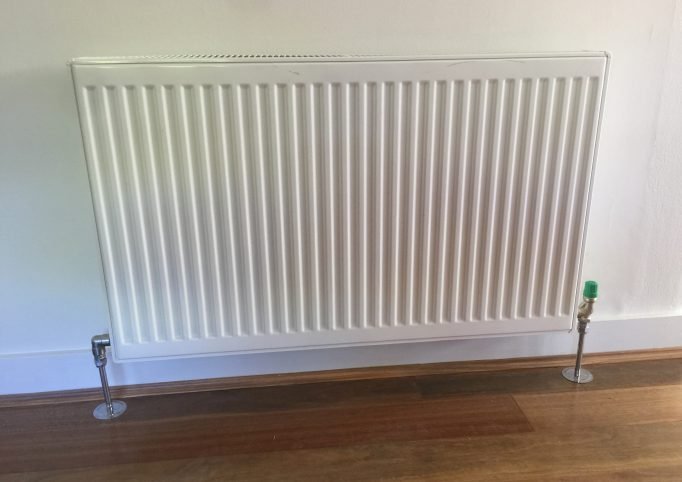
White hydronic panel radiator installed on wall above timber flooring with chrome pipe connections and thermostatic valve

Utilising Radiators with Underfloor Heating

Underfloor heating is unmatched for space heating in terms of both comfort and cost of operation. The only significant limitation of underfloor heating is that it can be expensive in some types of floors if the construction does not allow the hydronic piping to be embedded in a slab or screed.

This is why hydronic underfloor heating may not always be practical in upper floors where this is often a timber joist structure. However, heating these areas can be complemented effectively with hydronic radiators, which offer many of the benefits of underfloor heating, often with a reduced installation cost.

Radiators and Underfloor Heating Can Utilise the Same Heat Source

The main advantage of using hydronic underfloor heating with radiators is that a common heat energy source can be used for both systems; after all, both are based on the circulation of hot water which can be heated centrally.

With the combination of underfloor heating and radiators, one energy source is often the practical solution for the whole system. In most scenarios, this is best completed using a gas boiler. Electric resistance heaters are less attractive because of their relatively high running costs.

The Combination of Radiators with Underfloor Heating Enhances Comfort

Underfloor heating is the most comfortable space heating option available, but when floor construction is difficult, radiators are the next best option. Forced air heating, which is a common alternative, results in turbulent airflow and temperature shifts, both of which can create discomfort for occupants, especially for people with allergies aggravated by movement of dust.

Forced air heating can also be noisy, which could be an issue when occupants are sleeping or doing an activity that requires concentration. Systems that use forced convection often involve higher maintenance expenses due to the increased number of moving parts.

Additional Advantages of Radiators:  Durability and Appearance

Standard radiators have a warranty period of 25 years and our piping comes with a 25 year warranty. Boilers have a lifespan of up to 10 years if serviced regularly.

Another advantage of radiators is that many models have an antique appearance and look elegant in heritage homes, so a heating system does not have to look modern to be efficient.

Call us on 1800 636 091 or email at info@devexystems.com.au for more information.